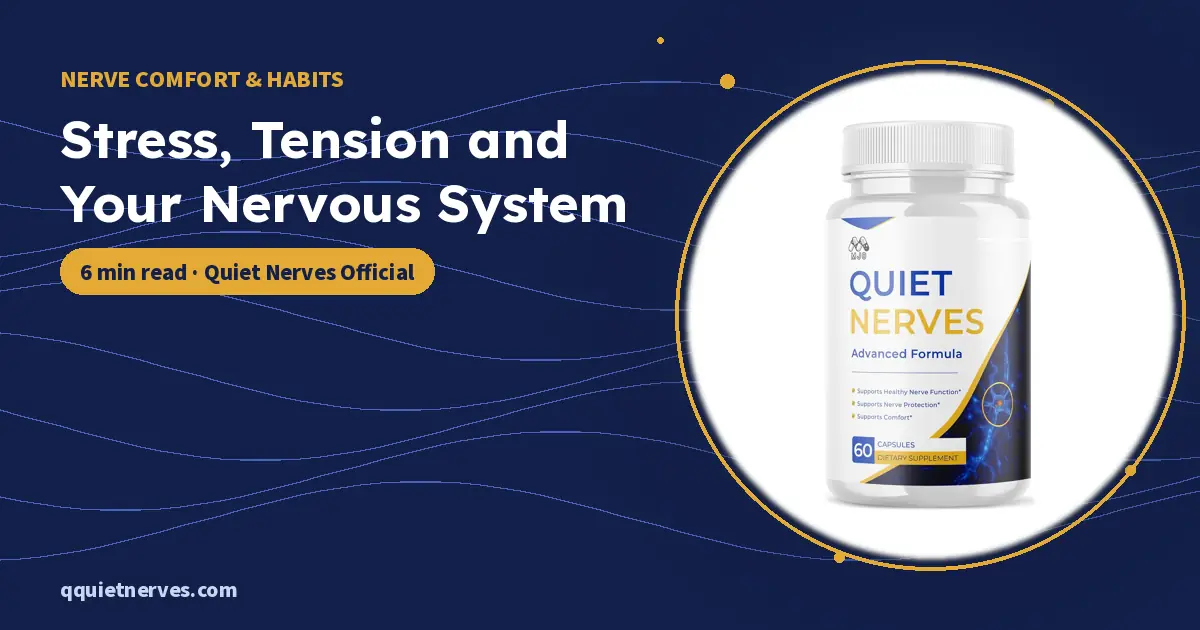
Stress keeps your body on high alert, which can make everyday sensations in your legs and feet feel louder and sleep harder to reach. Calming routines, movement, good sleep and steady nutrition help. A supplement such as Quiet Nerves supports healthy nerve function, but new or worsening symptoms still need a doctor.
Key takeaways
- Stress does not cause every odd sensation, but it can turn up the volume on discomfort you already notice.
- Simple daily habits such as slow breathing, walking and a fixed bedtime calm the stress response.
- Magnesium glycinate is one of six Quiet Nerves ingredients chosen for everyday nerve comfort.
- Numbness, burning or weakness should be checked by a doctor rather than blamed on stress.
Why stress lands in your body, not just your mind
When life piles up, your body reacts before you have a chance to think. Heart rate climbs, muscles brace and breathing gets shallow. This is the classic fight-or-flight response, and it is useful in short bursts.
The trouble starts when the alarm never switches off. Weeks of worry, caring for a relative, money pressure or poor sleep can leave you feeling wired and tired at the same time. Many readers tell us their feet and legs seem more uncomfortable on exactly those days.
That is not imagination. A tense, alert nervous system tends to pay closer attention to every signal, so a mild tingle that you would ignore on a calm afternoon can feel impossible to tune out at 11 p.m.
The loop that keeps you stuck
Stress and discomfort often feed each other. Here is how the cycle usually runs:
- A hard day leaves your muscles tight and your mind busy.
- Evening sensations in your feet or calves feel stronger because you are on alert.
- Sleep breaks up, so you wake less rested.
- Tiredness lowers your patience and makes the next day feel more stressful.
Breaking any one link helps the rest. You do not need to fix everything at once. Pick the step that feels easiest and start there. Our guide to settling restless legs and feet at night covers the sleep link in detail.
Calming habits you can begin tonight
These are low-cost, low-risk and suitable for most adults. Try two or three for a fortnight before judging them.
- Long exhale breathing: breathe in for four counts and out for six, for five minutes before bed.
- A short daily walk: ten to twenty minutes of easy movement helps burn off stress hormones. See our gentle exercise ideas for nerve comfort.
- Warm, not hot, foot soaks: check the water with your elbow first if your feet feel less sensitive.
- A screen curfew: phones off thirty minutes before lights out.
- Worry list: write tomorrow's concerns on paper so your mind can let go of them.
Quick tip: Pair a new habit with something you already do. Breathing exercises right after brushing your teeth are far easier to remember.
Where magnesium and nutrition fit in
Magnesium plays a part in normal muscle and nerve signalling, and surveys suggest many older adults eat less than recommended. The NIH magnesium fact sheet lists leafy greens, nuts, seeds and whole grains as good food sources.
Quiet Nerves uses magnesium glycinate, a gentle and well-absorbed form, alongside five other ingredients aimed at nerve comfort, circulation and cellular energy. If evenings are your hardest time, you may also like our piece on magnesium and winding down for sleep.
A supplement is a support, not a switch. It works best next to the habits above, taken every day with a meal.
When it is not just stress
It is tempting to put every odd feeling down to a busy life. Please do not. Numbness, burning, pins and needles or weakness can come from diabetes, low vitamin B12, thyroid problems, certain medicines or a trapped nerve. The NINDS overview of peripheral neuropathy explains why finding the cause matters.
Book a doctor's visit if symptoms are new, getting worse or affect one side only. Call 911 straight away for sudden one-sided weakness, a drooping face or trouble speaking. Our article on common causes of tingling feet lists the checks your doctor may run.
Making a calm, confident choice
If you have checked in with your doctor and want to add daily nerve support, keep the decision simple. Look at the full ingredient list, the guarantee and the cost per day. Our complete Quiet Nerves guide pulls all of that together, and the price breakdown compares each package.
Every order comes with free shipping and a 60-day money-back guarantee, so you can try it without pressure. See today's Quiet Nerves packages and choose the supply that suits your routine. Bundle prices and bonuses can change, so the figures at checkout are the ones that count. When you are ready, pick your bottle bundle here.
Also worth reading: Quiet Nerves Shipping, Delivery and Tracking and Quiet Nerves Ingredients: All Six Explained and Alcohol and Your Nerves: What Heavy Drinking Does.
Frequently asked questions
Can stress make my feet tingle?
Stress can make you notice sensations more and can tighten muscles, but it is rarely the only explanation for tingling. Because diabetes, B12 levels and medicines are common causes, ask your doctor to check before assuming it is stress.
Will Quiet Nerves calm my anxiety?
Quiet Nerves is not an anxiety product. It is a dietary supplement that supports healthy nerve function, circulation and cellular energy. If worry or low mood is affecting your daily life, speak with your doctor about proper support.
How quickly do relaxation habits help?
Some people feel calmer after the first breathing session, while sleep and tension usually improve over two to three weeks of steady practice. Keep a short diary so you can see changes that are easy to miss day to day.
Health note: have numbness, tingling, burning or weakness checked by a doctor, and ask before combining Quiet Nerves with blood thinners, diabetes, blood-pressure or thyroid medicines. Call 911 for sudden one-sided weakness or trouble speaking. Educational content only – see our disclaimer.