To stay steady after 60, keep active with balance and strength exercises, make your home safer with good lighting and grab bars, wear supportive shoes, review medicines with your doctor, and have your eyes and feet checked. See a doctor for new unsteadiness, and call 911 for sudden one-sided weakness or trouble speaking.
Key takeaways
- Balance depends on your feet, eyes, inner ear, muscles and brain working together.
- Numb or tingling feet can make balance harder, so foot sensation is worth checking.
- Simple home changes like night lights and grab bars lower everyday risk.
- Quiet Nerves supports nerve comfort as part of a routine; it does not fix balance problems.
Why balance changes with age
Staying upright is a team effort. Your feet send messages about the ground, your eyes read the room, your inner ear senses movement, and your muscles make constant small corrections.
With age, each part can slow a little. Add tingling or numb feet, a new medicine or weaker leg muscles, and the whole system gets less reliable.
Many falls happen at home during ordinary moments: getting up at night, stepping out of the shower or carrying laundry down stairs.
The encouraging part is that balance responds to practice at any age. A few minutes of targeted exercise, a brighter hallway and the right shoes can make a noticeable difference to how confident you feel moving around your own home.
Common causes of unsteadiness
| Cause | What helps |
|---|---|
| Reduced feeling in the feet | Doctor assessment, foot checks, good shoes |
| Weaker leg muscles | Strength and balance exercises |
| Medicines causing dizziness | Medication review with your doctor |
| Vision changes | Yearly eye exam, good lighting |
| Inner ear problems | Doctor or specialist assessment |
| Low blood pressure on standing | Rise slowly, discuss with your doctor |
For more on nerve-related causes, read peripheral neuropathy basics and medications that can affect nerves.
When to see a doctor
Book a visit if you have had a fall, feel unsteady more often, or notice new or worsening numbness, tingling, burning or weakness in your legs. These symptoms need a diagnosis; tests for blood sugar, B12 and thyroid are common starting points. The NINDS page explains how nerve problems can affect balance.
Call 911 for sudden weakness or numbness on one side of the body, face drooping, trouble speaking, or sudden severe dizziness with these signs.
Get urgent care for a foot wound that is red, hot or not healing.
Make your home safer this week
- Add night lights from bedroom to bathroom.
- Remove loose rugs or secure them with non-slip backing.
- Install grab bars beside the toilet and in the shower.
- Put a non-slip mat in the bath or shower.
- Keep stairs clear and well lit, with rails on both sides if possible.
- Store everyday items between hip and shoulder height.
Quick tip: When you wake at night, sit on the edge of the bed for a slow count of ten before standing. It gives your blood pressure a moment to catch up.
Simple balance exercises
Practise these next to a sturdy counter, holding on as needed:
- Feet together stand: 20 to 30 seconds.
- Heel-to-toe stand: one foot directly in front of the other, 20 seconds.
- Single-leg stand: lift one foot slightly, 10 seconds each side.
- Sit to stand: 5 to 10 slow repetitions from a firm chair.
Tai chi classes and a physical therapist referral are both excellent options. See gentle exercise for nerve comfort for a fuller routine, and leg circulation tips for everyday movement ideas.
Supporting your nerves day to day
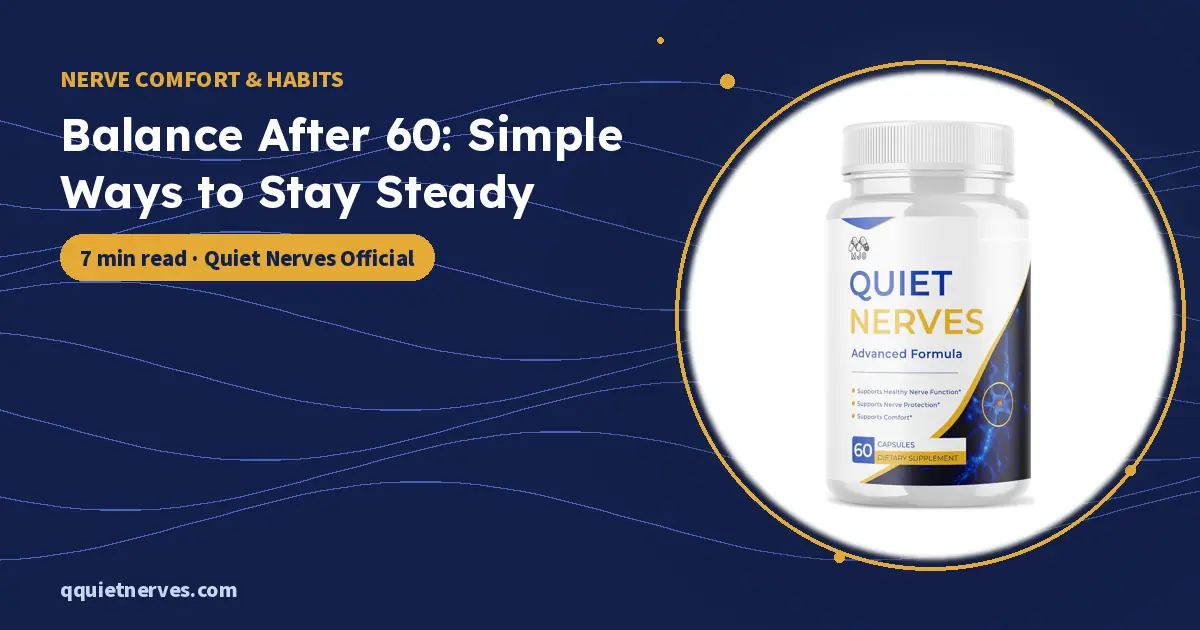
Because your feet are a big part of balance, looking after nerve comfort is part of staying steady. Quiet Nerves is a daily capsule made for adults in their 50s to 70s to support healthy nerve function, circulation and cellular energy.
Its six ingredients are magnesium glycinate, CoQ10, butcher's broom, L-carnitine, alpha lipoic acid and turmeric. The NCCIH CoQ10 page notes interactions to discuss with your doctor, and our Quiet Nerves for adults over 60 guide covers age-specific questions.
It does not fix balance problems and is not a substitute for exercise, home safety or medical care. Ask first if you take blood thinners, blood-pressure, diabetes or thyroid medicine.
Taking the next step
Steadiness grows from small habits repeated daily. The brand says many users notice changes in 2 to 4 weeks, with clearer differences for some at 6 to 10 weeks; results vary.
The 6-bottle package ($49 per bottle, 180 days) is the best value, and the 3-bottle package ($69 per bottle, 90 days) suits a first longer trial. Both ship free with a 60-day money-back guarantee. Prices and bonuses may change.
See Quiet Nerves package options, read the complete guide, or order your 90-day or 180-day supply.
Also worth reading: How to Take Quiet Nerves for the Best Consistency and Quiet Nerves Complete Guide 2026: Everything Before You Order and CoQ10: Cellular Energy, Circulation and Who Should Be Careful.
Frequently asked questions
Can numb feet cause falls?
Yes, they can. Your feet tell your brain where the ground is, so reduced feeling makes balance harder, especially in the dark. See a doctor to find the cause and ask about balance training.
Should I tell my doctor about a fall even if I was not hurt?
Yes. A fall can be an early sign of a medicine side effect, blood pressure drop, vision change or nerve issue. Reporting it helps your doctor spot problems before a more serious fall.
Will Quiet Nerves improve my balance?
Quiet Nerves is not designed to address balance problems. It supports healthy nerve function and circulation as part of a daily routine. Balance needs exercise, home safety steps and a doctor's assessment.
Health note: have numbness, tingling, burning or weakness checked by a doctor, and ask before combining Quiet Nerves with blood thinners, diabetes, blood-pressure or thyroid medicines. Call 911 for sudden one-sided weakness or trouble speaking. Educational content only – see our disclaimer.